
Data suggest that the climate crisis and invasive mosquitoes could spread this disease in 29 countries, including Spain
Chikungunya virus can now be transmitted across most of Europe
Data suggest that the climate crisis and invasive mosquitoes could spread this disease in 29 countries, including Spain
Data suggest that the climate crisis and invasive mosquitoes could spread this disease in 29 countries, including Spain
Chikungunya, a disease that until now was associated with tropical climates in Africa or Asia, is no longer a distant threat and is becoming a European reality. A study carried out by researchers from the UK Centre for Ecology & Hydrology and the University of Glasgow warns that this virus already has the potential to be transmitted across most of the continent during the summer months.
The combination of an increasingly warmer climate and the spread of invasive mosquitoes has created the perfect scenario for the disease to take hold in regions where it was previously unlikely or simply unthinkable. It is worth recalling that in Spain, in 2024, ten autonomous communities recorded 54 imported cases (46% confirmed), with no confirmed local cases, and that last year, up to August, 32 cases were reported according to the National Centre for Epidemiology. In August precisely, the Basque Government’s Department of Health reinforced measures after an autochthonous case of chikungunya was detected in Hendaye, linked to outbreaks in France, and two additional possible cases were reported in the same area.
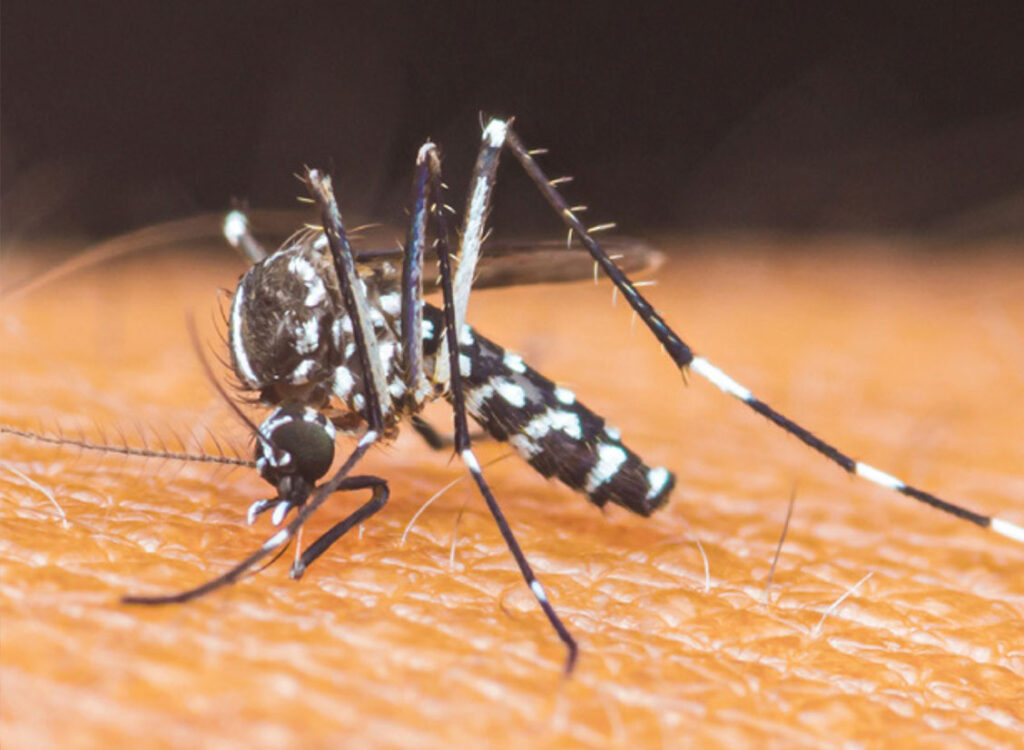
The main vector responsible for this disease is Aedes albopictus, better known as the tiger mosquito. This insect is not native to Europe, but since its arrival in the south of the continent in 2007, it has continued to spread towards central and northern Europe. Chikungunya is a disease that causes fever and joint pain so intense that, in some cases, it can become disabling. The virus is transmitted when the mosquito bites an infected person and, after a few days, passes the virus to another healthy person through a new bite.
One of the most important findings of this research, published in volume 23 (235) of the Journal of the Royal Society Interface, is that the virus can survive and be transmitted at lower temperatures than previously thought. Scientists have discovered that the transmission cycle is possible even when the thermometer reads around 13.8 degrees, a temperature that is common across much of Europe for a large part of the year.
In addition, the study highlights that the virus is extremely efficient in warm weather. At a temperature of 30 degrees, it needs only about 1.7 days to develop inside the mosquito and be ready to infect a human, a much shorter period than that of other similar diseases such as dengue. The point of maximum transmission efficiency is 25.6 degrees.
A risk map of 29 countries
The research analysed the situation in 29 European countries, revealing a highly varied risk map. Southern countries such as Spain, Italy, Greece and Portugal show the highest level of alert, with favourable conditions for transmission during six or more months of the year, generally between May and November.
Countries in central Europe such as France, Germany, Austria, Belgium and the Netherlands fall into a moderate-risk zone, where the danger is concentrated within a window of three to five months per year. Even in more northern or Atlantic countries such as the United Kingdom, Sweden or Finland, there is a low but real risk during the months of July and August.
The study underlines that climate is only one part of the problem. The constant flow of travellers and international trade make it easier for infected people from other parts of the world to introduce the virus into Europe. If the tiger mosquito is present in the area and temperatures are suitable, a local outbreak may arise. For this reason, experts point out that understanding these seasonal patterns is crucial so that public health systems can design more effective control strategies and protect the population against the spread of these tropical diseases on European soil.
Article published in El Correo (subscription access)
last Thursday, 19 February 2026, by Julio Arrieta:


